Communication is a vital part of science.
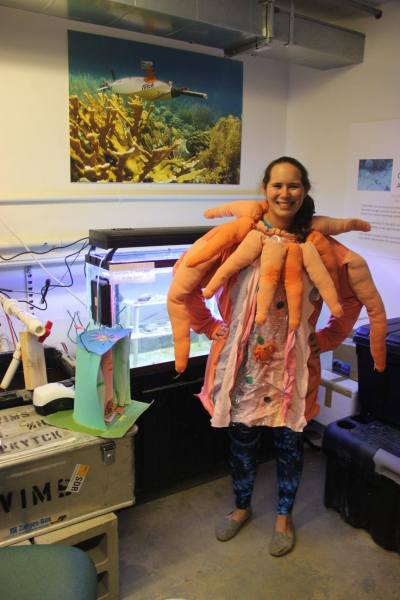
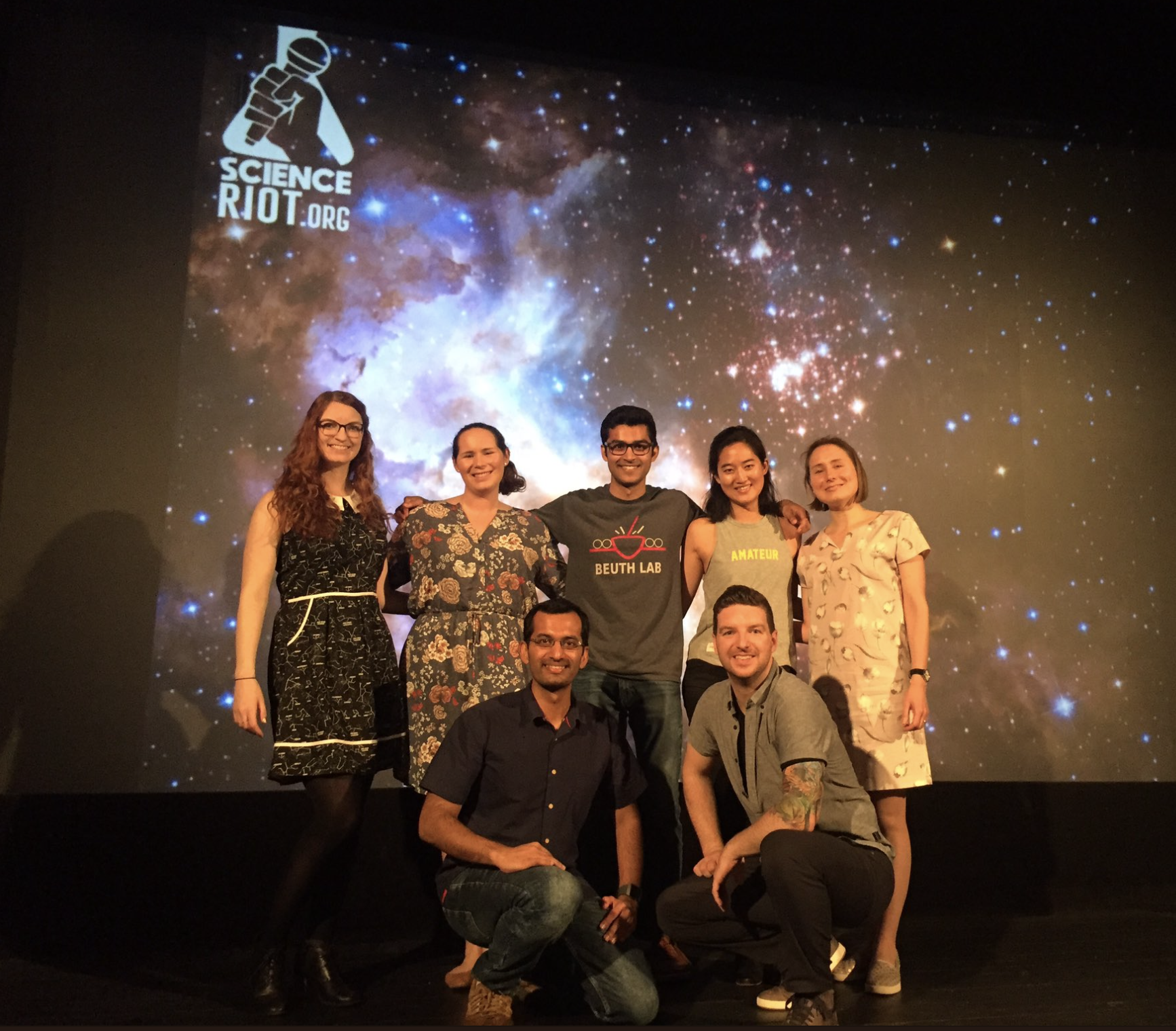
A successful scientist not only asks innovative questions and answers them with appropriate and novel methods, but can communicate effectively with peers and their broader community. I prioritize science communication in my research, mentoring, and teaching through several different efforts and am continuously learning and engaging in new communication practices for broader impacts. For example, I’ve completed three levels of improvisational theatre training at ImprovBoston to improve my communication skills (some background) . I also performed during the Cambridge Science Festival (2019) after completing Science Riot’s standup comedy workshop.
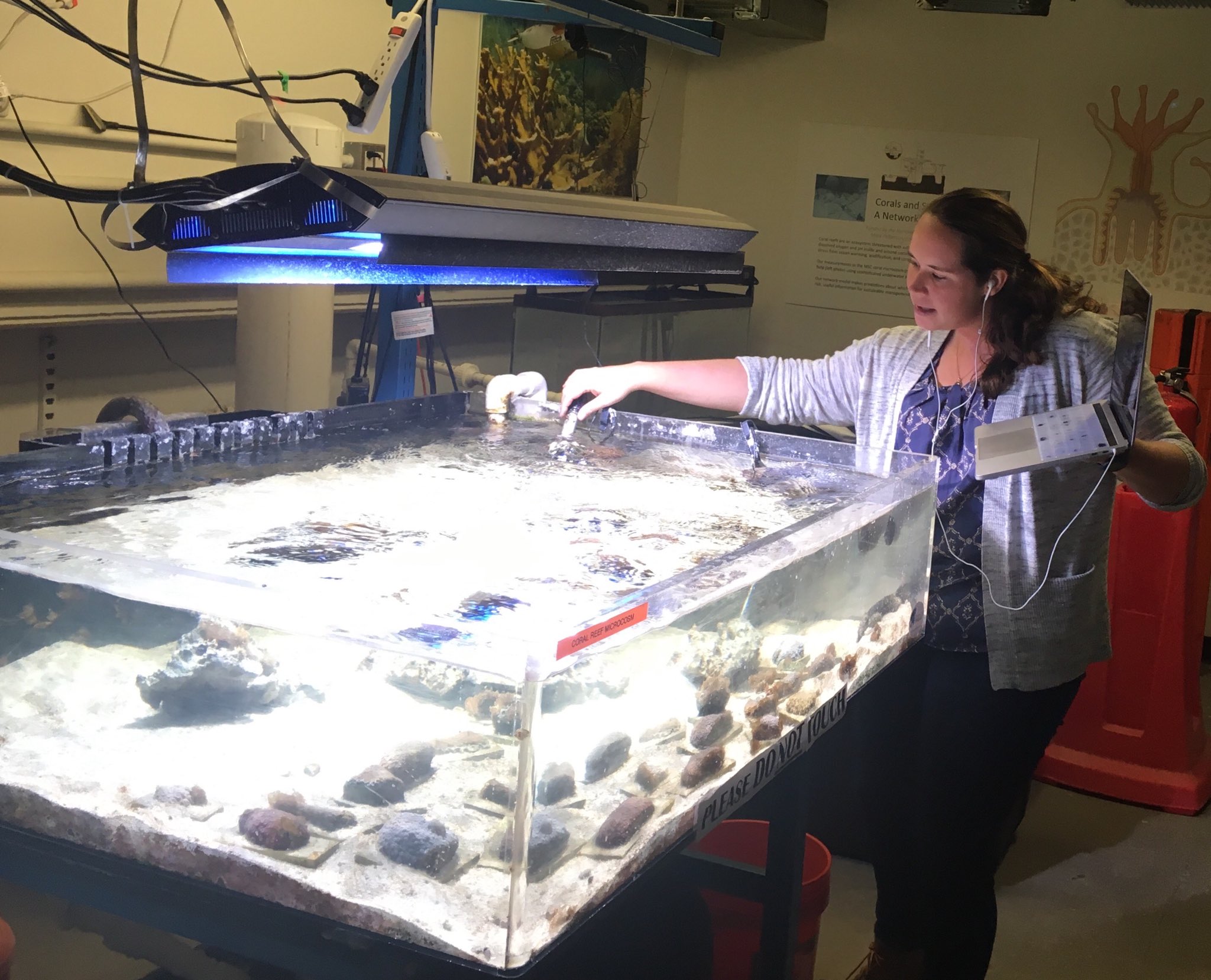
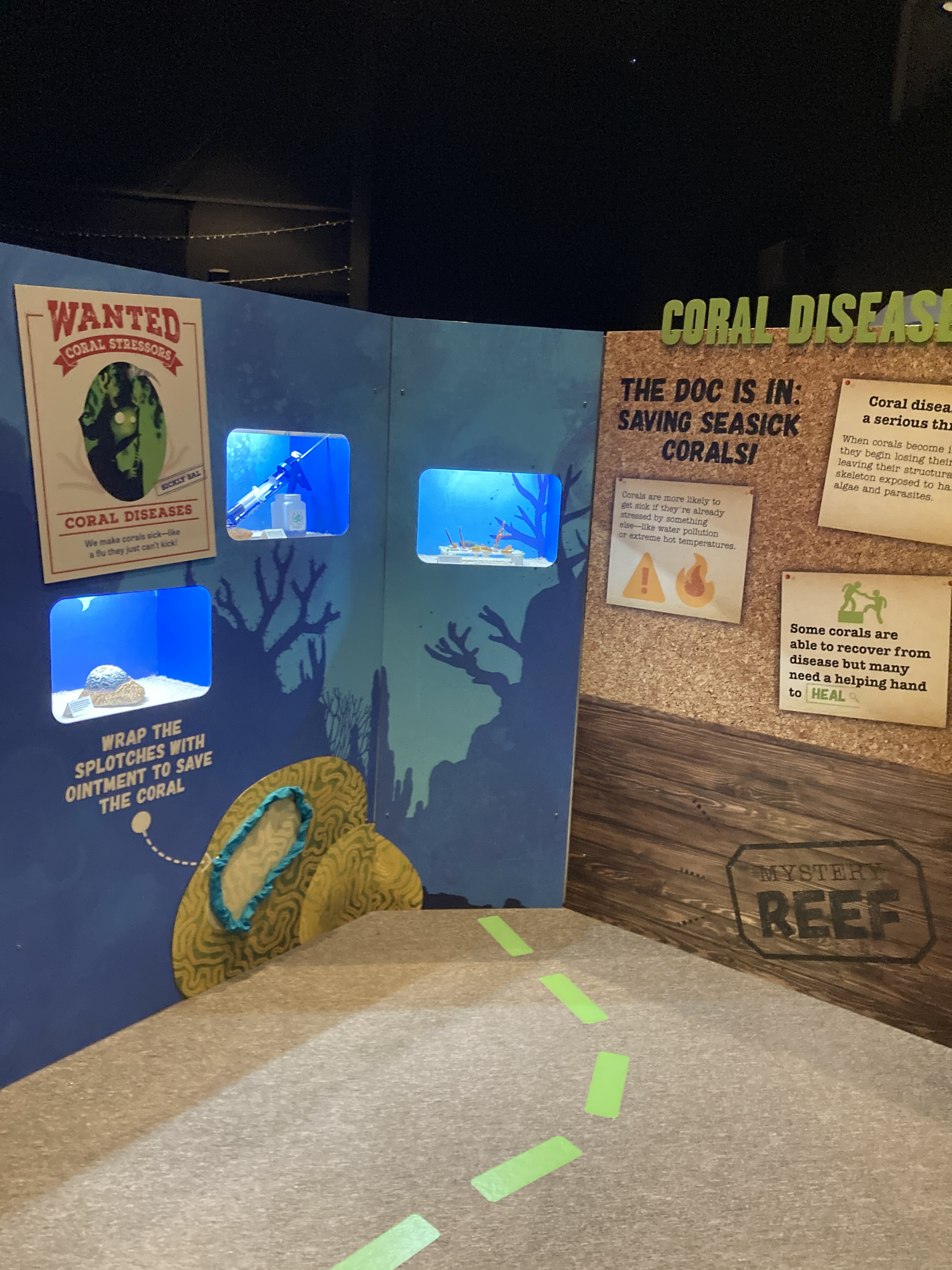
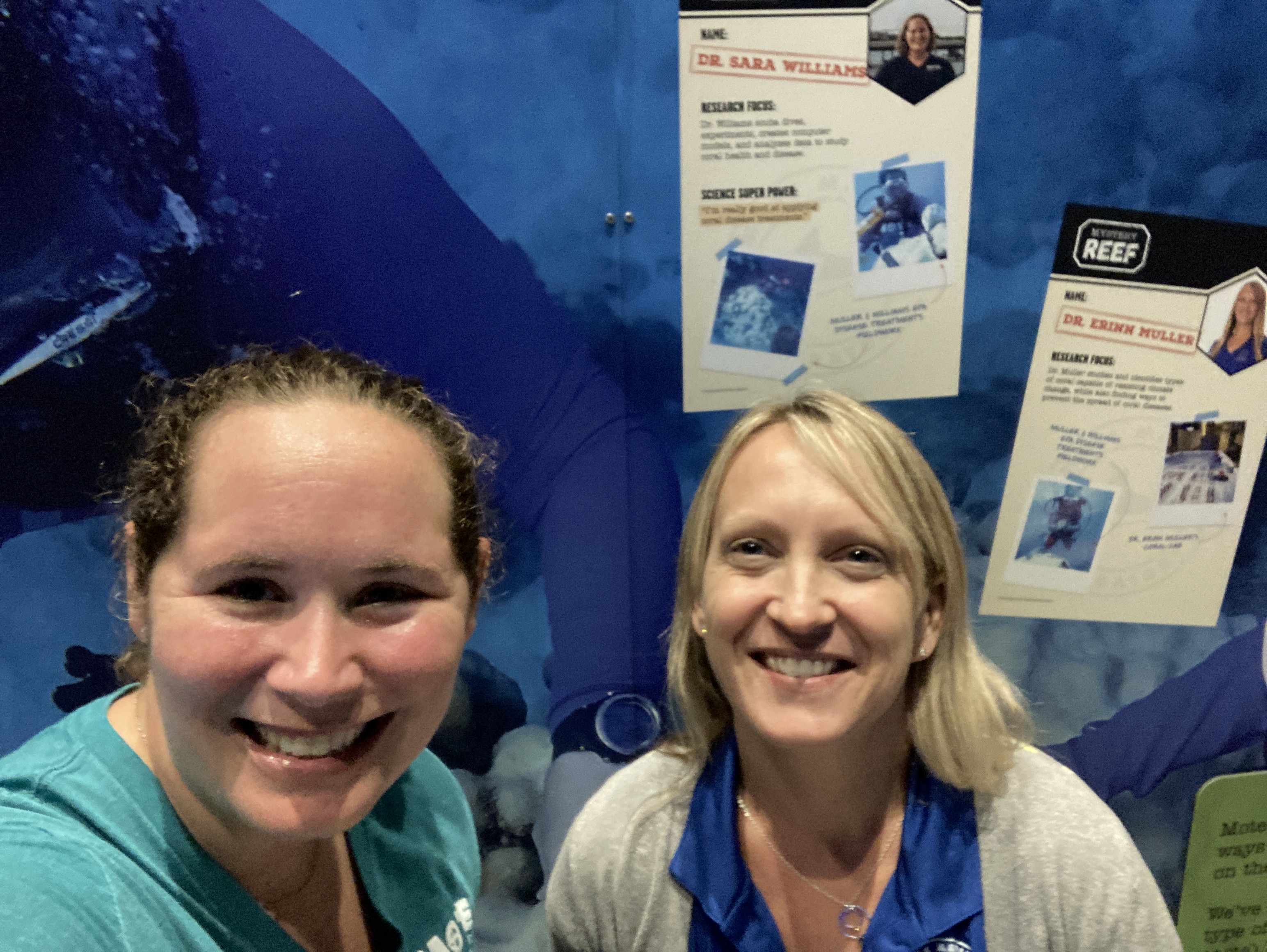
While at Mote, I lead tours of our lab spaces to perspective donors and various education groups. I’ve presented about my research at monthly Volunteer meetings, several brown bag research seminars, and public lectures (e.g. Mote-ivational Monday 2025 Lecture). Additionally, I have served as a science officer for the Sarasota Chapter of SCUBAnauts, a position in which I led monthly marine science lessons and occasional dives for this group of passionate ocean-minded high schoolers. In 2022, I accompanied Dr. Erinn Muller to to Saba Sea and Learn, where we taught several different local groups about coral reefs and led several dives surveying stony coral tissue loss disease around the island (learn more here). Working at Mote also provides opportunities to directly interact with and share my research with aquarium visitors. In 2024, I consulted with the Aquarium’s exhibits team on their Mystery Reef Exhibit that featured research by Mote’s Coral Scientists.
I have practice communicating my science in both virtual and in person spaces to a wide-range of educational levels. During Fabien Cousteau’s Mission 31 (Summer 2014), I connected with the Boston Museum of Science from 60 ft under the sea in Aquarius, the world’s only underwater research lab. For the mission, I also created online educational material for Cerego on coral reefs, which was previously freely available. I have used Skype in the Classroom (SITC) to connect with students all over the world and share my science. During my time in graduate school, I hosted lessons on coral reef biology and virtual field trips.
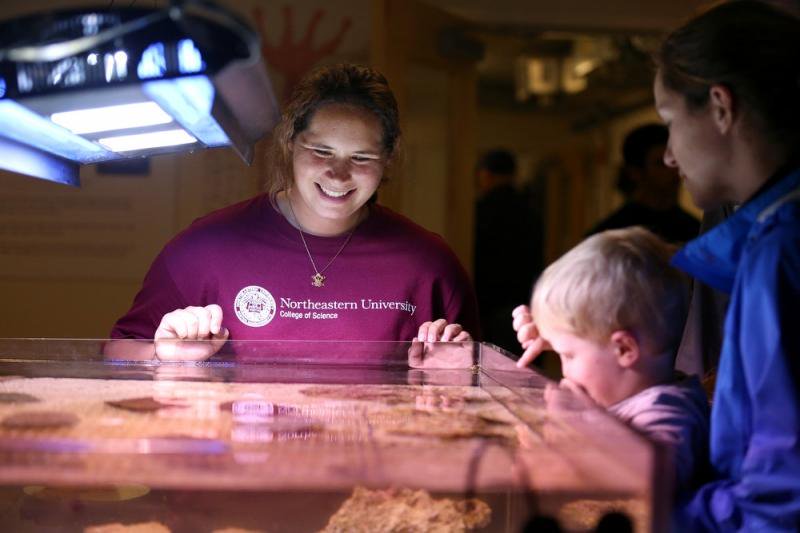
In person, I presented workshops for high school students at the Massachusetts Marine Educators High School Marine Science Symposia (2015, 2016). This lead to presenting at the Massachusetts Marine Educators Annual Conference (2016) about my workshop on coral bleaching. The workshop adapted a lesson plan developed by NOAA’s Coral Reef Watch program. While at Northeastern University’s Marine Science Center, I was on the planning committee for a series of Science Cafes on Boston’s North Shore. We invited speakers from the area to talk about their science in a casual setting. Amanda Dwyer and I also developed and taught a science communication workshop for Northeastern’s Three Seas masters and undergraduate programs, in which we covered narrative structure, the COMPASS message box, social media, improv theatre exercises, and elevator pitches.
Media Features
- Mote Scientists Invited to Saba to Survey Coral, Teach Community
- Mote scientists present coral discoveries in Germany
- New Mote peer-review publication highlights importance of studying the microbiomes of coral
- Park Service Teams up with Mote Labs to Test Coral Disease Treatment
- An aquatic adventure resurfaces
- Undergraduate research leads to NSF graduate research fellow award
 Sara Dell Williams